
Publications

Armando López
«Vestiges of heterotopia»

David Karminski
Hold your gaze

C Photo Magazine
No. 3
Inge Henneman
‘Karina’
Dirk Lauwaert
«Mexican photographer»
Vestiges of heterotopia
By Armando López Muñoz
At the beginning of 2000, Mexico achieved political alternation after 70 years of party dictatorship. At that time, a large part of population lived with hope and enthusiasm this change in form of government since it was understood that the perennial economic, social and political crisis that the country was experiencing had its cause and origin in the PRIish regime that was coming to end. At same time, the price of Mexican oil reached historic highs. The country was getting ready to achieve the welfare it had always dreamed of and clearly deserved.
In the first part of the 21st century were lived with enthusiasm and confidence, but nothing much happened. Inertia, structures and institutions of the past hindered the progress promised by democracy. Step by step, the new government demonstrated incapacity, corruption and repressive policies against social movements. Under these conditions of power vacuum, the de facto powers dedicated to drug traffic guind gained positions.
Meanwhile in USA, the armed group Al-Qaeda, in the middle of a series of terrorist attacks, brought down the Twin Towers in New York (live and full color). Faced with the terrorist alert, the United States organized a crusade-style war, invading Arabian countries and redoubled surveillance their southern border. Drugs produced in Mexico could not longer reach their market. Drug stayed in the country, and Mexico ceased to be a drug production place and transshipment and became a consumer population. All the narco cartels tried to reorganize across the map, they increased their ranks and the power of their weaponry, and effectively infiltrated their army forces and the local and federal police. The State’s monopoly of violence could no longer be guaranteed.
At the end of Vicente Fox’s presidential term (2006), in the midst of a very important electoral controversy, Felipe Calderón was appointed president. Faced with the danger of losing control of the State to the narco cartels, Calderon declared a «war» against drug traffic. A most naïve strategy given the conditions of corruption and ineptitude of the State.
This is the moment in which WILFRIED VANDENHOVE travels through a large part of Mexico submerged in pain, frustration, disenchantment and hopelessness.
«A BEAUTIFUL NOISE» turns us into witnesses of this scenario, subverting the language of tourist postcards by showing us, in large format, villages and very uncrowded highways of Mexico, where a paradoxical, disturbing calm is perceived.
This photographic series has been halfway between documentary and contemporary photography; it is in search of the aesthetics of everyday wear and tear, in the industrial look, in the erosion and corrosion of what dies of old age and not because of premature programmed obsolescence.
The images show what remains, what does not go anywhere despite being in the middle of those roads and those photographic journeys through Mexican territory. What remains in its place without moving also passes, not in space, but in time, and consequently, those immobile objects that inhabit the transit space become a polysemic trace of the anachronistic, the archaic, the modern, the old, the futuristic, the failed and the efficient.
Mexico was frozen as a paradoxical desert-oasis unrelated to utopia and dystopia; halfway between the third world and progress, the desert and the sea; where a nomad-city-village inhabited in abandonment, concrete in the middle of uninhabited landscapes, pools and dirt roads takes root. But it is also the territory where a story is built that tells us about displays and pick-up trucks as if they were modern wagons of a new Mexican «old western», where tractors plow the desert, trailers graze abandoned while violence leaves house corpses and cars in front of images of saints, indifferent witnesses.
The photographic proposal by WILFRIED VANDENHOVE is linked to the photographic postcard because it shares its intention: to satisfy the need for registration during the journey as a subjective or standardized account of one’s own traces. In that sense, «A BEAUTIFUL NOISE» is a series of «postcards» that come to us from the margin of history and territory, where it seems that any road can take us out of time and the unimportant and ungraspable can become a map.
In this way, preserving the inconsequential through the photographic record bears witness to how, on the margins of the metarelate of progress and welfare, history disappears and time becomes dense as light near a black hole. But it also bears witness to how, even in these post-historical circumstances, beauty continues to exist, dignifying the human gaze.
WILFRIED VANDENHOVE’s images do not fall into the surrealist trap of recording the non-ordinary social reality, and instead, generate oniric atmospheres from the textures, the light and the irrelevant everyday life portrayed without the inclusion of picturesque characters or crazy events. «A BEAUTIFUL NOISE», rises in this way, among similar proposals, as an expressionist, anticlimactic and contemplative documentary.
The series is composed of 55 printed images that measure almost 3 meters on their longest horizontal side. In the series we find detail shots, although the open shots predominate for their aesthetic relevance. His images of showcases remind us of Atget’s work, but in the series we find mainly, although in a contemporary language, Pop and Kitsch influences that remind us of the work of Larry Sultan, William Eggleston or even Martin Parr -although WILFRIED VANDENHOVE avoids including people or animals in his frames to enhance the empty and intriguing and anodyne landscapes.
The saturated treatment of color gives a cinematic halo to the images; and the play of color temperature between natural and artificial light generates a palette that unites the extremes of bladerunneresque cyberpunk and madmaxian dystopia, within a clean and precise framing that allows us to imagine an Edward Hopper in which humanity has suddenly and without warning evaporated, leaving behind an absurd and beautiful world.
In «A BEAUTIFUL NOISE» WILFRIED VANDENHOVE achieves documentary and hypnotic images that transport us to remote places and generate a magical post-realism, but without the cheesy astonishment or the playful approach as a trigger for the photographic shot.
«A BEAUTIFUL NOISE» is a documentary record of a roadtrip in subjective (even though the images play a rhetoric of objectivity); but it is not a chronicle of prodigies but a log of the vestige, a map of those places that are no longer dystopian, nor utopian.
«A BEAUTIFUL NOISE» is a journey without epic or heroes, in which walls replace (usurp) the thresholds and everything slowly sinks into the shifting sands of the time that was left out of the metanarratives.
David Karminski Katz
«Hold your gaze«
People, as never before in human history, consume thousands of symbols through our technological devices. We comment, rank and like the content we like until the algorithms develop a pattern of our personality capable of predicting what we like to see and excluding from our screens everything that we dislike, causes repulsion or discomfort.
This technological mechanism, encouraged by a society focused on pleasure and satisfaction, has reinforced our habit of looking away from what bothers us. It has trained us to look uncompromisingly and to forget as quickly as possible the suffering and social injustice around us.
That is why it is not surprising that the first encounter with the series of photographs Life is (Not) a Miracle seems to us to be very raw, difficult to assimilate. Our eyes immediately turn to the overwhelming poverty and marginalization that is imposed on us and presented through emaciated bodies, wounds, filth, intoxication and violence as a reflection of an abyss full of tragedy and pain.
However, when dragged by negative emotions we overcome our primary need to evade images and decide to keep our gaze on them, we are revealed, only at that moment, the true value of the story that is told to us.
Wilfried Vandenhove shows us nine years (1999-2008) of social work alongside young people in street conditions in Mexico City, but not as a documentary filmmaker or photographer. His portraits go beyond aesthetic aspirations, pointing out the problem or giving presence to the socially invisible. There is not a hint of naivety or yellowing in his story.
The photographs, taken mostly with a polaroid 600 capture fleeting moments. They denote ephemeral moments of intimacy between the subjects. There are no forced poses or elegant compositions. It is not the record of misery that motivates the photo or an editorial guideline, but the genuine and casuallink of friendship and camaraderie that makes you pay attention to people, their emotions and the context in which they operate.
When we hold our gaze on his photographs, we are fleetingly participants in the moment, we discover the chiaroscuros of accompanying those whom society has discarded. We begin to notice the solidarity, the irony, the laughter, the exhaustion and the strength of the bonds. Subtly the distance between us, the photographer and the portrayed is shortened and we are shown the fragility of the human condition.
Through his lens, Vandenhove reminds us that all human beings pursue dignity and are susceptible to falling when it is taken from us. That we need each other. That we live, die, suffer and celebrate the dichotomies of life equally. That the only way to understand that is to start by observing others, no matter how hard it is, by holding the gaze.
Written by (Spanish version): David Karminski Katz
Spell and style correction: Daniela Ekdesman Levi
Translation from Spanish to English: Daniela Ekdesman Levi
C Photo Magazine
No. 3
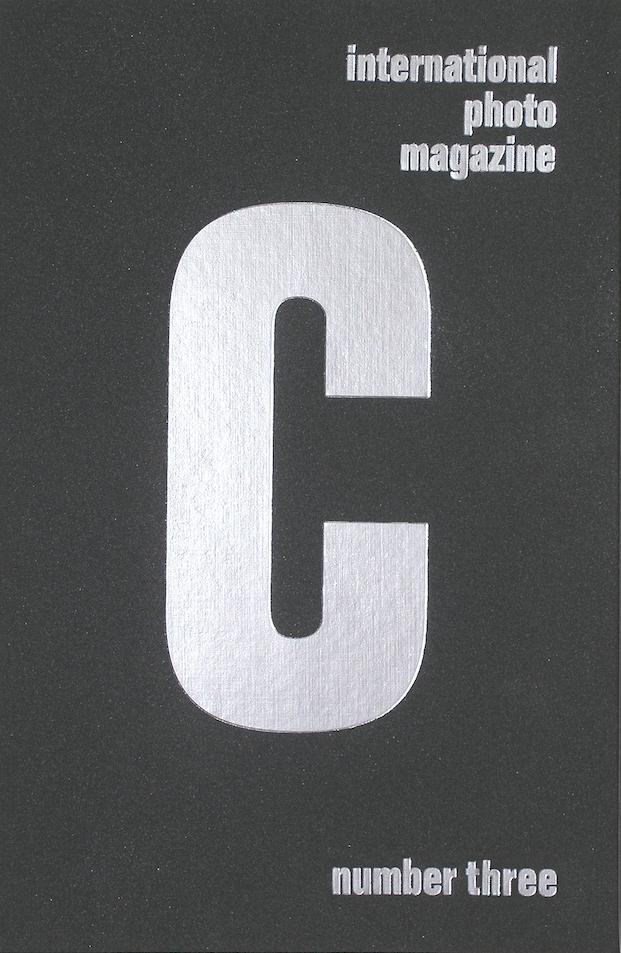
Publisher: Ivory Press
City: London / Madrid
Year: 2006. Edition: 1st ed
Mexico City, an early victim in the colossal downfull suffered by many Latin American, African and Asian capitals, is the backdrop for the work of Belgian photographer Wilfried Vandenhove. Vandenhove has lived for years in neighbourhoods housing some of the poorest people in Mexico City.
These chaotic settings contain the most haunting examples of the precariousness in which human life can exist.
His stark photographic essays throw a harsh light on the appalling urban scene whose inhabitants are forced to live in conditions of profound and morally indefensible squaler.
Inevitably condemned to social invisibility, their sole presence in images projects the despicable abyss we have contrived to create and strive to ignore.
C Photo Magazine
Wilfried Vandenhove
«Karina»
The portrait series of ‘Karina’ and her family is the final piece in Wilfried Vandenhoves (Belgium, 1970) humiliating documentary series about – and with – a community of children who survive in the streets of Mexico City, where the photographer herself is already more lives and works for more than five years.
The clear sequence of portraits of Karina and her mother, her sister and daughters, her husband and in-laws actually forms a counter-image, charged by the contrast with the other corpus of Vandenhove’s photos, which do show the hidden, harsh reality of the environment of the street children. imaging.
The devastating decay of the environment, the body and the social fabric. The ex-biotope of Karina, who in her previous life was one of the street children Wilfried Vandenhove got to know. But in the end you can also consider these Polaroids as a zero point, which anticipates a new life, for which the foundation has been laid, but which remains largely unknown and remains to be conquered. Wilfried Vandenhove therefore stages a form of amnesia in his portraits; any trace of that predominant context of the negative, in whatever sense, has been omitted.
The Polaroid camera with its relatively inferior mechanism, which at its best can produce a spectrum of artificial, unstable colors and diffused light, is essential to Vandenhove’s photographic imagery. Its use is deceptively simple, said Walker Evans, who spent the last creative months of his life working exclusively with a Polaroid camera, which he called «the toy.» ‘The Polaroid camera reduces everything to the level of your mind and feeling. That’s why I’m very interested in the medium because I feel that if you have certain things in your head, this is the tool that will test it. The damn thing does whatever your attention is focused on. You really need to know something before you can point the camera at something.
You have to know what grabs your attention, and why – even if all this happens instinctively.” (Walker Evans, Polaroids, Scalo, nd) It is therefore the quality of Vandenhove’s ‘brain and taste’ that makes this portrait series a ‘correct’ statement about the struggle for survival of the homeless in this world, without any decorum, spectacle or pretension.
What strikes in these Polaroids, which were taken from the gut, is the visual and expressive power of a thoughtful and at the same time instinctive observation.
Dirk Lauwaert
Wilfried Vandenhove, «Mexican photographer».
Photographing in Mexico is for him getting into a car full of cameras and gasoline. Truckers next to him, ripped tires, sand. forward! Locked up for days in a desolate adventure. He photographs the landscape that seems to be his natural habitat with his back to it. However wide his panorama, he does not embrace it. He never sits in the landscape for a moment, like even Robert Adams. His view of the landscape is merciless. Rather: you bore me.
I ask him if he wants to pass judgment. About the land, the poverty, the disorder. –No, he says, I never take my photos to judge. That has consequences. Which frame do you make, which subject do you choose? If you are not guided by judgment and therefore by values, frameworks offer no guidance. Neither for the photographer and certainly not for us viewers. I can best describe these images as «uprooted photos». That is never pleasant, always destabilizing. It is as if language (photographic, moral, aesthetic) is slowly crumbling. That is the laboratory, the mental darkroom, in which Vandenhove experiments.
Always on the edge. Countless photographers have responded to the call from afar. Almost always to find themselves there, in a wonderful conversation with the strange with which they try to reconcile with themselves. «In» the landscape, «in» dialogue. The great solidarity between the strange, nature and oneself.
Vandenhove does not talk about his journeys, his experiences. He is not autobiographical, rather anti-biographical. Strange, he says, interested only for a moment. Then he sinks back into blind absence. The camera takes over from him. He wants to make an image, not to be in the world. The camera does not smell, touch, or even see. The dark hole in which everything disappears with a sigh. Imagine Columbus’ first step on this unknown ground. Suppose he enjoys that step so much that he wants to repeat it over and over. The movie trick with fast-forwarding and rewinding.
Suppose he never wants to take a second step and certainly not a third. Because with each next step, he scrapes the first away. Something like that happens here. The photographer has become unfamiliar, and does not want to. He never gets used to it, he never learns anything. His car is a small spaceship that flies over the surface of a planet with dozens of cameras and sensors. In a silent noise full of anonymous, cold, mechanical beauty that does not – never – need us. Like Mexico never asked for this photographer. Isn’t all photography really that: a voice in the void? He is constantly traveling from here to there. Here he is only for the time being. He has no permanent residence. That relationship without a name (a relationship about which one cannot speak, cannot speak) amazes me.
How does something like this translate into images? How does that affect the viewers here? Also now a cross movement: as a viewer you are here and you look at there. That trip costs me a bit of imagination (I have nothing to do with Mexico, at the most with Ribera and Cartier-Bresson, with Eisenstein and Bravo). A precious psychic journey! Not exactly at dump prices! However wide his panoramas (even wider! even wider! ), Vandenhove makes «unrooted» shots. The misplaced tourist curiosity, exoticism and dubious interest in people cannot settle in his images. A sentence of his along the lines of: I have no judgment, no emotion with what I see, explains a lot. He happens to be there, but not interested. detachment. However powerful the boxes often are, they do not express or explain, they do not analyze and glorify. In his car crammed with cameras at the ready, he sits as if in a capsule, like Columbus on his squat. His camera has long ceased to be an extension of the eye, the body and the heart. He is almost there denying it. Don’t touch me. Don’t upset me at all. But also something like: don’t explain anything to me, don’t explain yourself, don’t make me understand anything. This work of often powerful beauty is as shocking as photographs of the surface of a planet are. Like all photography that has mattered for half a century, it is the exploration of distance, of unwanted intimacy.
The title says it all: in the drumming of the wind through the open window of his speeding car there is an explosion of sound that coincides with silence. But that is the very essence of photography. Mexico. In that Latin American country, no, he did not take root, but found his model. The painter, the photographer is not concerned with her as a lover, but with her as a movement. As an attitude, expression, form with which he can do something, no, everything.
He returns here every few months. What does he call and feel what is «here» for us? He does not photograph here, his instruments have no raison d’être here. Here he talks, asks judgment, seeks support. Mexico is inadequate for that. The problem then is: who are you making these images for? For here? For there? Where is his address, his audience? A nasty situation.
Between the exoticism for us and the strange gaze for them there, the elusiveness of his work hovers. He tells in detail about what he experiences and does not understand, but he does not take pictures of it. He has never been “in” Mexico (except for one series). Years of visiting have not been able to bridge anything. He does not pretend to sympathize, to share a common humanity with the inhabitants. His work is numb. No, he says, what I see produces nothing in me. To really see these images, you have to take that sentence seriously.